Step-by-Step Guide to Growing Garlic in Your Garden
Here’s a step-by-step guide to growing garlic at home
Garlic is one of the easiest and most rewarding crops you can grow in your garden. It doesn’t require much space, it keeps pests away from other plants, and the taste of homegrown garlic is far richer and more aromatic than anything you’ll find at the store. Whether you’re a beginner or an experienced gardener, planting garlic is a simple way to get a big harvest with minimal effort.
1. Choose the Right Garlic Type
Before you start, it’s important to choose the right type of garlic for your climate and garden.
There are two main types, which are better for Growing Garlic in Your Garden.
- Softneck garlic: Best for warmer climates. It has more cloves per bulb and stores for a long time.
- Hardneck garlic: Better for colder regions. It produces larger cloves and a flower stalk (called a scape), which is edible too.
Tip: Buy garlic bulbs from a garden center or seed supplier rather than grocery store garlic, which is often treated to prevent sprouting.
2. Pick the Perfect Spot
Garlic loves sunlight and grows best in a well-drained, loose, and fertile soil. Choose a sunny part of your garden that gets 6–8 hours of sunlight a day.
- Avoid areas where onions, leeks, or garlic were grown in the last two years to reduce disease risk.
- Make sure the soil is not waterlogged — garlic doesn’t like “wet feet.”
3. Prepare the Soil
Garlic grows best in rich, loose soil. Prepare your garden bed a few weeks before planting:
- Loosen the soil about 8–10 inches deep.
- Mix in plenty of compost or well-rotted manure for nutrients.
- Aim for a soil pH between 6.0 and 7.0.
Tip: Adding a little wood ash or bone meal before planting can help boost bulb development.
4. Plant the Garlic Cloves
Garlic is planted from individual cloves, not seeds. Each clove will grow into a new bulb.
When to Plant for Better Garlic Growth in Your Garden.
- In most regions, plant garlic in autumn (October–November) for a summer harvest.
- In warmer climates, you can also plant in early spring (January–February).
How to plant:
- Separate the cloves from the bulb, keeping the papery skin intact.
- Plant each clove pointy end up about 5 cm (2 inches) deep.
- Space them 10–15 cm (4–6 inches) apart, with 20–25 cm (8–10 inches) between rows.
Tip: Water lightly after planting to settle the soil around the cloves.
5. Water and Mulch
Growing garlic needs consistent moisture, especially during early growth. Water the bed whenever the top of the soil feels dry, but avoid overwatering.
- Mulch with straw, leaves, or grass clippings to keep moisture in, suppress weeds, and protect against cold.
- Reduce watering once the leaves start to yellow near harvest time.
6. Care and Maintenance
Garlic is low-maintenance, but a little care will improve your yield:
- Weed regularly: Garlic doesn’t compete well with weeds.
- Feed the plants: Apply compost tea or an organic fertilizer once or twice during the growing season.
- Remove scapes (for hardneck types): When flower stalks appear, cut them off to direct energy into bulb growth.
Pest tip: Garlic naturally repels many pests, but watch out for onion maggots and nematodes. Crop rotation helps prevent problems.
7. Know When to Harvest
Garlic is usually ready to harvest 7–8 months after planting.
Signs it’s ready:
- The lower leaves turn yellow and dry while the top ones remain green.
- Bulbs feel firm and plump when gently checked.
How to harvest:
- Loosen the soil with a garden fork and gently pull up the bulbs.
- Don’t yank them by the stems — they can break.
8. Cure and Store Garlic
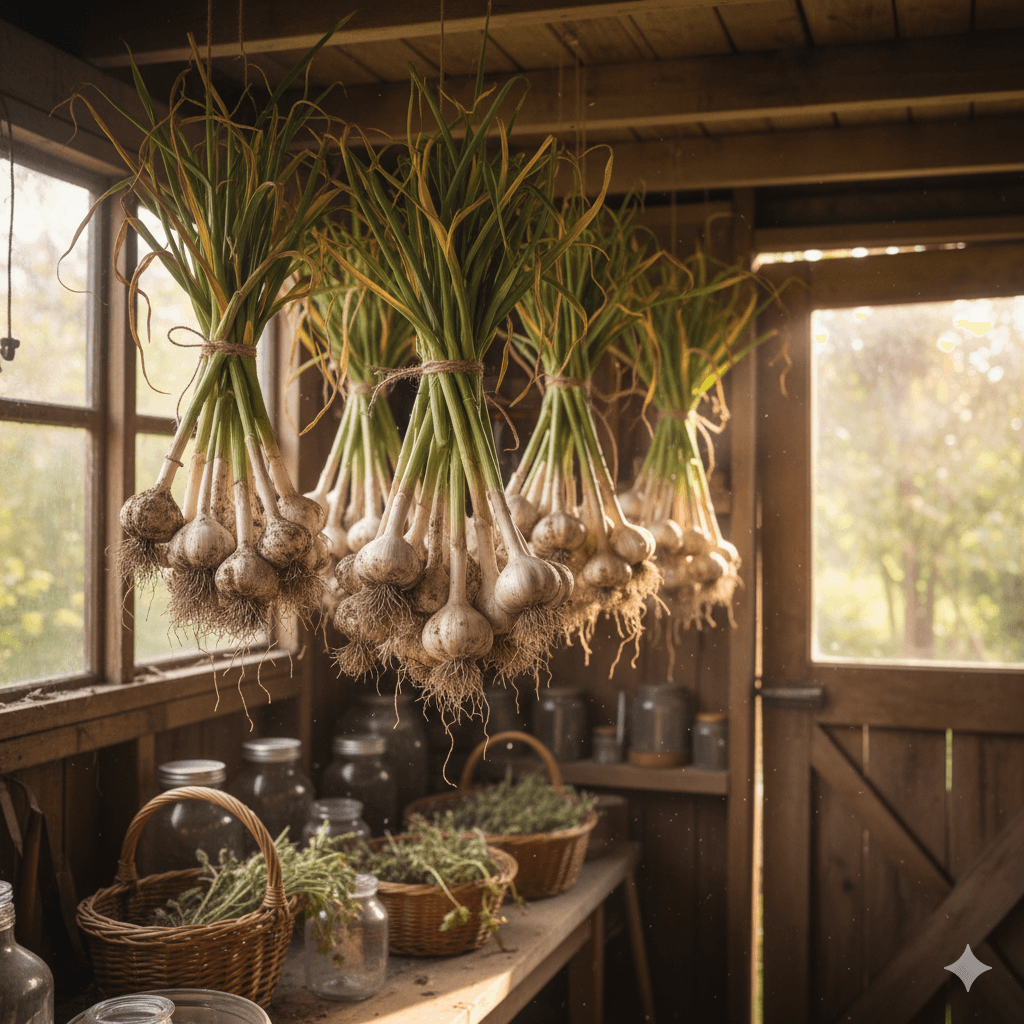
After harvesting, garlic needs to cure (dry) before storing.
- Lay bulbs in a dry, shaded, well-ventilated area for 2–3 weeks.
- Once dry, brush off soil (don’t wash) and trim the roots and tops.
- Store in a cool, dry, and dark place. Properly cured garlic can last for 6–8 months.
Final Tips for Growing Garlic
- Save a few bulbs from your harvest to plant next season.
- Companion plant garlic with carrots, lettuce, or tomatoes — it helps repel pests.
- Avoid over-fertilizing with nitrogen, which encourages leaf growth over bulbs.
Also follow Step-by-Step Guide to Growing Tomatoes in Pots at Home