Ornamental Grass Care: Complete Growing Guide
Ornamental Grass Care
Ornamental grasses are among the most versatile and low-maintenance plants you can add to your garden. They provide year-round beauty, movement, texture, and color while requiring minimal care compared to many flowering plants.
Whether you want to create a modern landscape, a natural prairie-style garden, or an attractive border, ornamental grasses can enhance the visual appeal of any outdoor space.
In this comprehensive guide, you’ll learn how to grow, care for, and maintain ornamental grasses successfully.
Table of Contents
What Are Ornamental Grasses?
Ornamental grasses are grass-like plants grown primarily for their decorative value rather than for lawns or agricultural purposes. They come in various sizes, colors, and textures, ranging from compact varieties suitable for containers to towering grasses that create dramatic focal points.
Many ornamental grasses produce attractive seed heads and plumes that add beauty from summer through winter. They are also drought-tolerant, pest-resistant, and adaptable to different growing conditions.
Also Read: November Birth Flower: What Is My Birth Flower?
Popular Types of Ornamental Grasses
Some of the most popular ornamental grasses include:
| Grass Type | Height | Features |
|---|---|---|
| Fountain Grass | 2–5 feet | Graceful arching foliage and fluffy flower spikes |
| Maiden Grass | 4–8 feet | Tall growth and attractive plumes |
| Blue Fescue | 8–12 inches | Compact blue-gray foliage |
| Switchgrass | 3–6 feet | Upright habit and colorful fall foliage |
| Japanese Forest Grass | 1–2 feet | Cascading leaves for shade gardens |
| Mexican Feather Grass | 1–3 feet | Fine-textured, airy appearance |
Ideal Growing Conditions
Sunlight
Most ornamental grasses thrive in full sun, requiring at least 6 hours of direct sunlight daily. Sun-loving varieties develop stronger stems, richer colors, and better flowering.
Some species, such as Japanese Forest Grass, prefer partial shade and perform well in woodland gardens.
Soil
Ornamental grasses adapt to a wide range of soil types, including sandy, loamy, and clay soils. However, they grow best in well-drained soil.
To improve soil quality:
- Mix compost into planting areas.
- Avoid waterlogged locations.
- Ensure proper drainage for container-grown grasses.
Temperature
Most ornamental grasses are highly adaptable and can tolerate heat, cold, and drought once established. Always select varieties suited to your local climate zone.
Also Read: Ultimate Rooibos Tea Plant Cultivation Guide
How to Plant Ornamental Grasses
Step 1: Choose the Right Location
Select a site with adequate sunlight and enough space for the mature size of the grass. Overcrowding can reduce airflow and plant health.
Step 2: Prepare the Soil
Loosen the soil to a depth of 10–12 inches. Remove weeds, rocks, and debris. Incorporate organic matter to improve fertility and drainage.
Step 3: Dig the Planting Hole
Dig a hole twice as wide as the root ball and about the same depth.
Step 4: Plant the Grass
Place the plant in the hole so the top of the root ball is level with the surrounding soil. Backfill with soil and gently firm around the roots.
Step 5: Water Thoroughly
Water deeply after planting to help settle the soil and eliminate air pockets.
Watering Requirements
Newly planted ornamental grasses need regular watering during their first growing season.
General watering guidelines:
- Water 1–2 times per week during establishment.
- Allow the soil surface to dry slightly between watering sessions.
- Mature plants often require watering only during prolonged dry periods.
Overwatering can lead to root rot, especially in poorly drained soils.
Fertilizing Ornamental Grasses
Ornamental grasses generally require very little fertilizer.
For healthy growth:
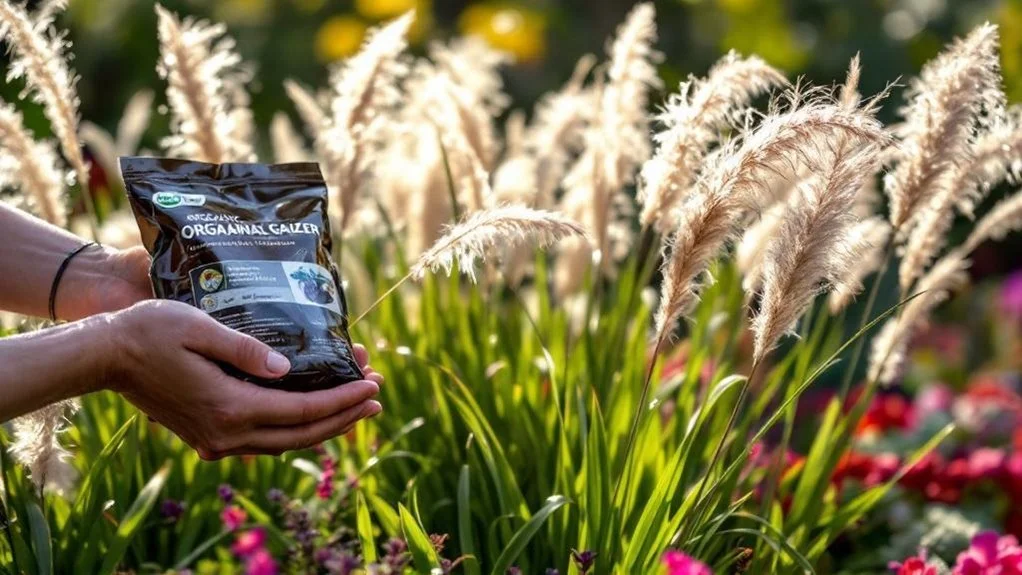
- Apply a balanced slow-release fertilizer in early spring.
- Use compost annually to improve soil quality.
- Avoid excessive nitrogen, which can cause weak, floppy growth.
Many ornamental grasses thrive even in nutrient-poor soils.
Mulching Benefits
Mulch helps conserve moisture, suppress weeds, and regulate soil temperature.
Apply a 2–3 inch layer of organic mulch such as:
- Bark chips
- Straw
- Shredded leaves
- Compost
Keep mulch a few inches away from the base of the plant to prevent rot.
Pruning and Maintenance
One of the biggest advantages of ornamental grasses is their low maintenance.
Annual Cutting Back
Most deciduous ornamental grasses should be cut back in late winter or early spring before new growth emerges.
Steps:
- Gather foliage into a bundle.
- Tie with twine if necessary.
- Cut stems 4–8 inches above the ground.
This encourages fresh, vigorous growth.
Removing Dead Foliage
Evergreen ornamental grasses only require occasional trimming to remove damaged or dead leaves.
Dividing Ornamental Grasses
Over time, ornamental grasses can become crowded or develop dead centers.
Divide plants every 3–5 years by:
- Digging up the clump.
- Splitting it into smaller sections using a sharp spade.
- Replanting healthy divisions immediately.
Division rejuvenates plants and provides free new specimens for your garden.
Common Problems and Solutions
Although ornamental grasses are generally trouble-free, a few issues may occur.
Yellowing Leaves
Possible causes:
- Poor drainage
- Overwatering
- Nutrient deficiency
Improve drainage and adjust watering practices.
Floppy Growth
Usually caused by:
- Too much fertilizer
- Insufficient sunlight
Reduce fertilization and move plants to a sunnier location if possible.
Fungal Diseases
Excess moisture and poor airflow can encourage fungal issues.
Prevention tips:
- Avoid overhead watering.
- Space plants properly.
- Remove dead foliage promptly.
Landscaping Ideas Using Ornamental Grasses
Ornamental grasses can be used in numerous ways:
- Border plantings
- Privacy screens
- Foundation plantings
- Wildlife gardens
- Rock gardens
- Container displays
- Water-wise landscapes
Their graceful movement in the wind adds a dynamic element that few other plants can match.
Conclusion
Ornamental grasses are an excellent choice for gardeners seeking beauty with minimal maintenance. Their diverse sizes, colors, and textures make them suitable for nearly any landscape design. With proper planting, occasional watering, and annual pruning, these hardy plants can provide year-round interest and elegance. Whether you’re creating a modern garden or a naturalized landscape, ornamental grasses offer a reliable and attractive solution for long-lasting garden appeal.
Frequently Asked Questions (FAQs)
1. Do ornamental grasses come back every year?
Yes, most ornamental grasses are perennial plants that return each year when grown in suitable climates.
2. How fast do ornamental grasses grow?
Growth rates vary by species, but many ornamental grasses establish quickly and reach mature size within two to three years.
3. Can ornamental grasses grow in pots?
Yes. Compact varieties such as Blue Fescue and Japanese Forest Grass grow well in containers with good drainage.
4. When is the best time to plant ornamental grasses?
Spring and early fall are the best planting times, allowing roots to establish before extreme temperatures arrive.
5. Do ornamental grasses attract wildlife?
Yes. Many species provide shelter and nesting sites for birds, while seed heads can serve as a food source.
6. Should ornamental grasses be cut back every year?
Most deciduous ornamental grasses benefit from annual cutting back in late winter or early spring.
7. Are ornamental grasses drought-tolerant?
Many ornamental grasses are highly drought-tolerant once established, making them ideal for water-efficient landscapes.
8. Can ornamental grasses spread aggressively?
Some varieties spread by rhizomes and may become invasive. Research the specific species before planting and choose clump-forming varieties if containment is a concern.
Also Read: Ornamental Grass Care