Best potting mixture for orchids : Expert review
potting mixture for orchids
Orchids are among the most beautiful and rewarding houseplants, but they require a different growing medium than ordinary plants. Unlike most houseplants that thrive in regular potting soil, many orchids are epiphytes, meaning they naturally grow on trees and absorb moisture and nutrients from the air and surrounding organic matter. Because of this unique growth habit, choosing the right potting mixture is essential for healthy roots, vigorous growth, and abundant blooms.
In this guide, you’ll learn everything about orchid potting mixtures, the best ingredients to use, and how to create the perfect mix for your orchids.
Table of Contents
What Is an Orchid Potting Mix?
An orchid potting mix is a specially formulated growing medium designed to provide excellent drainage, air circulation, and moisture retention. Unlike traditional garden soil, orchid mixes are lightweight and porous, allowing roots to breathe while preventing waterlogging.
A good orchid potting mix mimics the orchid’s natural environment and helps prevent common problems such as root rot, fungal diseases, and poor flowering.

Also Read: Amazing Wandering Jew Plant Cultivation Guide
Why Regular Potting Soil Is Bad for Orchids
Many beginners make the mistake of planting orchids in standard potting soil. Unfortunately, regular soil is too dense and retains excessive moisture, which can suffocate orchid roots.
Problems caused by regular soil include:
- Poor air circulation around roots
- Excess moisture retention
- Increased risk of root rot
- Reduced nutrient uptake
- Stunted growth and flowering
Using a specialized orchid potting mixture ensures that roots remain healthy and well-aerated.
Essential Ingredients in an Orchid Potting Mix
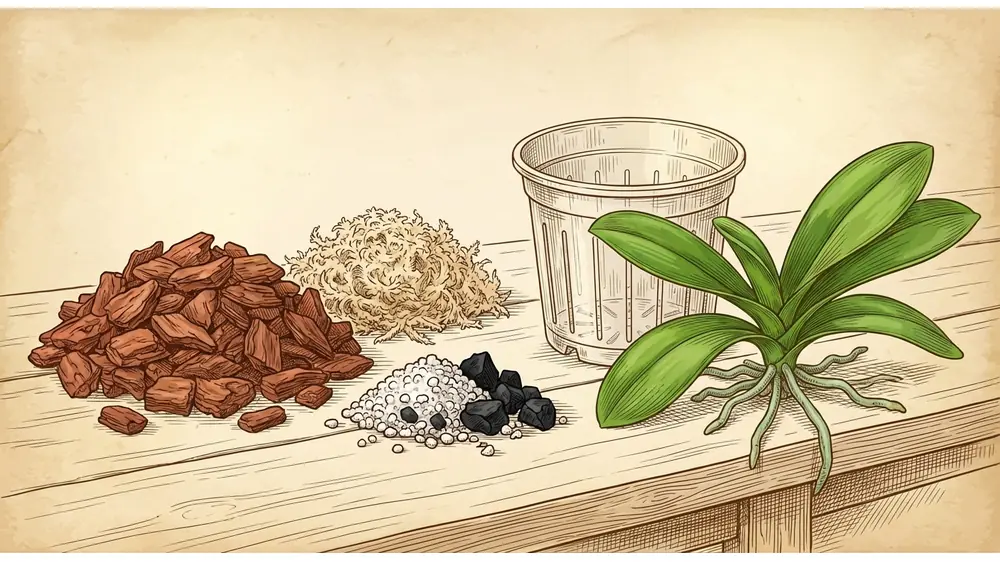
| Ingredient | Main Function | Benefits |
|---|---|---|
| Bark Chips | Provides structure and aeration | Excellent drainage, promotes healthy root growth |
| Sphagnum Moss | Retains moisture | Keeps roots hydrated, ideal for dry environments |
| Coconut Husk Chips | Balances moisture and airflow | Sustainable, long-lasting, prevents root drying |
| Perlite | Improves drainage | Increases aeration and reduces root rot risk |
| Horticultural Charcoal | Absorbs impurities | Keeps potting mix fresh and improves drainage |
| Lava Rock | Enhances airflow and stability | Durable, prevents compaction, supports larger orchids |
| Pumice | Improves drainage and root aeration | Lightweight and long-lasting growing medium |
| Tree Fern Fiber | Mimics natural orchid habitat | Excellent moisture retention and air circulation |
Also Read: Ghost Chilli Cultivation Guide
1. Bark Chips
Bark is one of the most common orchid potting materials. Fir bark, pine bark, and hardwood bark are widely used because they provide excellent drainage and airflow.
Benefits:
- Improves aeration
- Prevents root compaction
- Mimics natural growing conditions
- Supports healthy root development
2. Sphagnum Moss
Sphagnum moss retains moisture while remaining airy. It is especially useful for orchids grown in dry climates.
Benefits:
- Holds moisture efficiently
- Reduces watering frequency
- Encourages root growth
- Suitable for young orchids
3. Coconut Husk Chips
Coconut husk chips are a sustainable alternative to bark and provide a balance of moisture retention and aeration.
Benefits:
- Long-lasting medium
- Retains water effectively
- Environmentally friendly
- Provides excellent root support
4. Perlite
Perlite is a lightweight volcanic material that improves drainage and prevents compaction.
Benefits:
- Enhances aeration
- Promotes drainage
- Reduces risk of root rot
- Lightweight and easy to mix
5. Charcoal
Horticultural charcoal is often added to orchid mixes to absorb impurities and improve air movement.
Benefits:
- Keeps mix fresh
- Absorbs toxins
- Improves drainage
- Helps reduce odors and fungal growth
6. Lava Rock
Lava rock provides stability and excellent drainage, making it useful for larger orchid varieties.
Benefits:
- Long-lasting
- Improves airflow
- Prevents root congestion
- Supports heavy plants
Best Potting Mix Recipes for Orchids
Standard Orchid Mix
Suitable for most orchids, including Phalaenopsis.
- 4 parts bark chips
- 1 part perlite
- 1 part charcoal
This mix provides excellent drainage and root aeration.
Moisture-Retentive Mix
Ideal for dry climates or orchids that prefer more moisture.
- 3 parts bark chips
- 2 parts sphagnum moss
- 1 part perlite
This blend maintains moisture without becoming waterlogged.
Fast-Draining Mix
Perfect for humid regions.
- 4 parts bark
- 2 parts lava rock
- 1 part charcoal
The mix dries quickly and reduces the risk of fungal issues.
Choosing the Right Mix for Different Orchids
| Orchid Type | Recommended Potting Mix |
|---|---|
| Phalaenopsis | Bark, perlite, charcoal |
| Cattleya | Coarse bark and charcoal |
| Dendrobium | Bark with lava rock |
| Oncidium | Bark and sphagnum moss |
| Paphiopedilum | Fine bark and moss mix |
| Vanda | Large bark chunks or mounted culture |
Selecting the correct mix according to orchid species improves plant health and flowering performance.
How to Repot Orchids Using the Right Mix
Step 1: Remove the Orchid
Carefully take the orchid out of its current container and shake off old potting material.
Step 2: Inspect the Roots
Trim dead, mushy, or black roots using sterilized scissors.
Step 3: Prepare Fresh Potting Mix
Moisten the new orchid mix slightly before use.
Step 4: Position the Orchid
Place the orchid in the center of the pot and spread roots naturally.
Step 5: Fill with Mix
Add potting mixture around the roots without packing it too tightly.
Step 6: Water Lightly
Wait a day or two after repotting before watering heavily to allow roots to recover.
Signs Your Orchid Potting Mix Needs Replacement
Orchid potting mixtures break down over time and lose their effectiveness.
Replace the mix if you notice:
- Bark decomposing into small particles
- Water draining slowly
- Unpleasant odors
- Root rot symptoms
- Reduced flowering
- Compact and dense medium
Most orchids benefit from repotting every 1–2 years.
Common Mistakes to Avoid
- Using garden soil
- Overpacking the potting mix
- Watering too frequently
- Choosing the wrong mix for the orchid species
- Ignoring decomposed potting material
- Using containers without drainage holes
Avoiding these mistakes can significantly improve orchid health and bloom production.
Conclusion
A high-quality orchid potting mixture is the foundation of successful orchid care. The ideal mix provides a balance of drainage, airflow, and moisture retention while mimicking the orchid’s natural growing environment. Ingredients such as bark chips, sphagnum moss, perlite, charcoal, and coconut husk create a healthy root zone that supports vigorous growth and stunning flowers. By selecting the right mix and repotting regularly, you can enjoy healthy, thriving orchids for many years.
Frequently Asked Questions (FAQs)
1. Can I use regular potting soil for orchids?
No. Regular potting soil retains too much moisture and restricts airflow, which can cause root rot.
2. What is the best potting mix for Phalaenopsis orchids?
A mix of bark chips, perlite, and charcoal is ideal for Phalaenopsis orchids.
3. How often should I replace orchid potting mix?
Most orchid mixes should be replaced every 1–2 years, depending on how quickly the materials break down.
4. Is sphagnum moss good for orchids?
Yes. Sphagnum moss retains moisture and works well for orchids that require consistent humidity.
5. Can orchids grow in bark alone?
Many orchids can grow successfully in bark alone, especially in humid environments.
6. Why is my orchid potting mix staying wet for too long?
The mix may be decomposed, too dense, or unsuitable for your orchid species. Repotting with a fresh, well-draining mix can help.
7. Should orchid roots be tightly packed in the pot?
No. Orchid roots need plenty of airflow, so the potting mix should remain loose and airy.
8. What is the easiest orchid potting mix for beginners?
A simple mixture of bark chips, perlite, and charcoal is easy to manage and suitable for most common orchids.
Also Read: Choosing the Best Orchid Potting Mix (Expert Guide)