a Full Overview of Growing Chilli Plants
The ABCs of Chilli plants
What to consider when growing chilli plants ?
Chili gardening involves planting seeds in well-draining soil during the warm seasons, providing ample sunlight, and maintaining consistent moisture levels. To start, sow seeds indoors in seed trays or pots, about 5mm deep, after soaking them in warm water to improve germination.
Start with Seed Selection and Germination
The journey starts with the seed! There are many different types of chillies, ranging from the mild Carolina Reaper to the fierce Bell Pepper (yes, it is a chilli!).
For germination, chilli seeds adore warmth. I’ve examined innumerable effective techniques, and it’s strongly advised to begin them indoors on a heat mat or in a warm location. Plant them in high-quality seed-starting mix, about a quarter of an inch deep.
Chilli plant types
Cayenne
Cherry
Long Red
Long Green
Poblano
Habanero
Jalapeno
Providing Space for the Growth of Chilli Plants
For optimal growth, I recommend planting them in 5-gallon pots or directly into a sunny garden bed once the danger of frost has passed and night temperatures are consistently above 50°F (10°C).
Water, Soil, and Sun: The Perfect Trio for Chilli plants
Thus, pick the area in your garden or balcony that receives the most sunlight. They thrive on at least 6-8 hours of direct sunlight per day.
Soil
They favor organic matter-rich, well-draining soil. For containers, a high-quality potting mix or amended garden soil will work wonders.
Watering
Water regularly but don’t allow the soil to become too moist. Cover the seed tray with perlite to aid moisture and heat retention, both of which the chilli seeds love.
Feeding Your Fiery Friends: The Role of Nutrients
Chilies require a well-balanced diet, just like us (figuratively speaking!). When your plants begin to bloom and bear fruit, they will benefit from fertilizer that contains more potassium and phosphorus to promote fruit production instead of just leafy growth.
The Greatest Benefit of Harvesting Your Heat
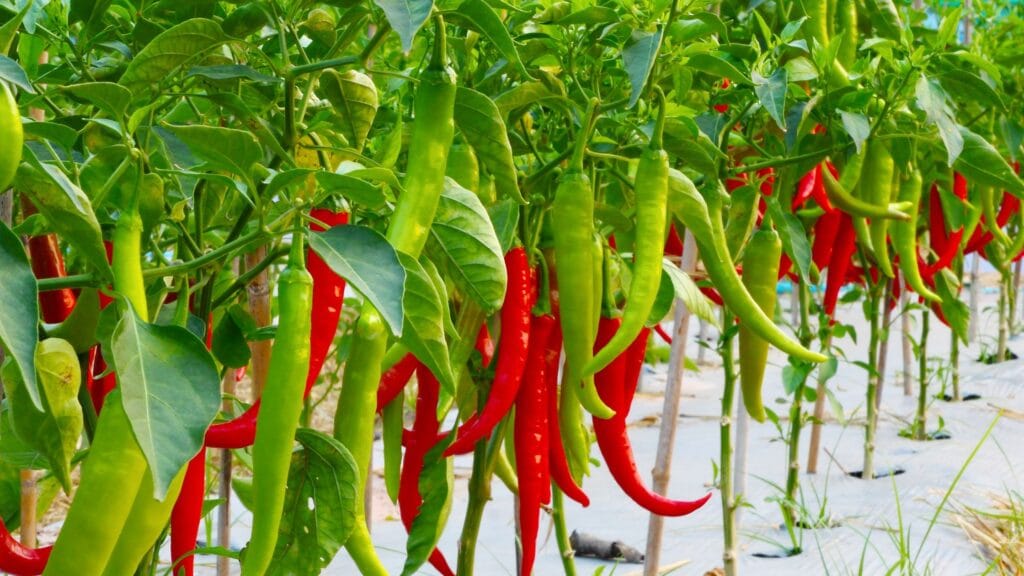
Your efforts have finally paid off! When the chillies reach their mature color—which, depending on the variety, can be red, yellow, orange, or even purple—they are usually ready to be harvested. Remember to wear gloves when harvesting hotter varieties, as the capsaicin (the compound that gives chillies their heat) can irritate your skin.
Growing chilies is an incredibly rewarding experience.
underground-vegetables-you-must-khow/https://www.agribuzz.org/web-stories/underground-vegetables-you-must-khow/